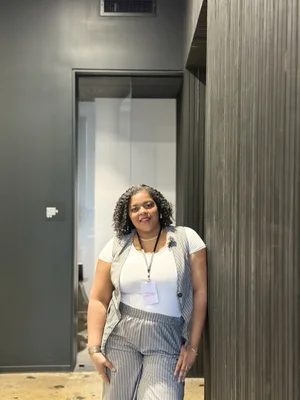
The inaugural Banyan Dance Festival is done. A full week of movement in West Palm Beach. Community classes, a silent disco, a gala, and a concert to close it out. Events sold out. The room was full. The work was beautiful.
And honestly? The part I am proudest of is the part nobody in that room ever saw.
WHAT I ACTUALLY BUILTNOT THE BRAND. THE FRONT DOOR.
I did not design the Banyan identity. That belongs to them and it is gorgeous. What I built was the ticketing.
That sounds small. It is not.
I set up every event inside Eventually, wired the whole thing into their website, and branded it so buying a ticket felt like part of the festival instead of a detour to some other platform that looks nothing like the thing you just fell in love with. Same colors. Same tone. No jarring handoff.
But the part that actually took the thinking was quieter than that. It was getting every event detail right across a week of programming. It was sitting with the founders to figure out exactly what they needed to know about a guest at the moment of checkout, and making sure the form asked for that and nothing more. It was making free tickets and paid tickets both feel like the same experience, because a guest does not care which category they fall into. They just want in.
That is not glamorous work. It is the work that decides whether the doors open smoothly on the day.
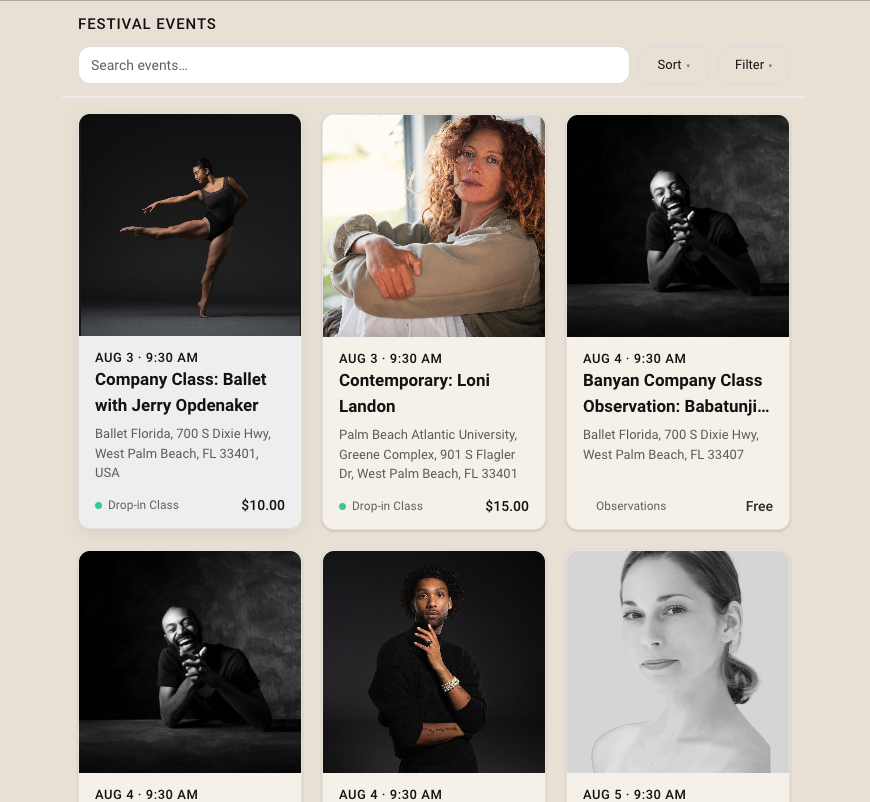
Festival ticketing page buildout in the beginning.
WHY THE FRONT DOOR MATTERSA BRAND IS THE FEELING SOMEONE HAS BEFORE THEY EVER ARRIVE
“A brand is the feeling someone has about you before they ever arrive. Everything between that feeling and the front row is part of the invitation.”
Here is what we forget when we talk about brand. We picture the logo. The palette. The font that took three rounds to land. All of that matters.
But for a festival, the very first real interaction is not the poster or the reel. It is the moment someone decides to come and goes looking for a ticket.
That moment is the front door. And if the front door sticks, people feel it, even when they cannot name it.
A gorgeous homepage and a clunky checkout is a beautiful house with a screen door that never quite latches. Guests will not tell you that is why they hesitated. They will just hesitate.
Smooth is a message too. A registration flow that just works tells someone, before they have set foot in the room, that they are in good hands. That the people behind this sweat the details. That the experience they are about to have will feel as considered as the one they are having right now, on their phone, at eleven at night, deciding whether to buy the ticket.
WHAT THE FOUNDERS SAIDTHE REAL MEASURE OF THIS KIND OF WORK IS THAT NOBODY HAD TO THINK ABOUT IT
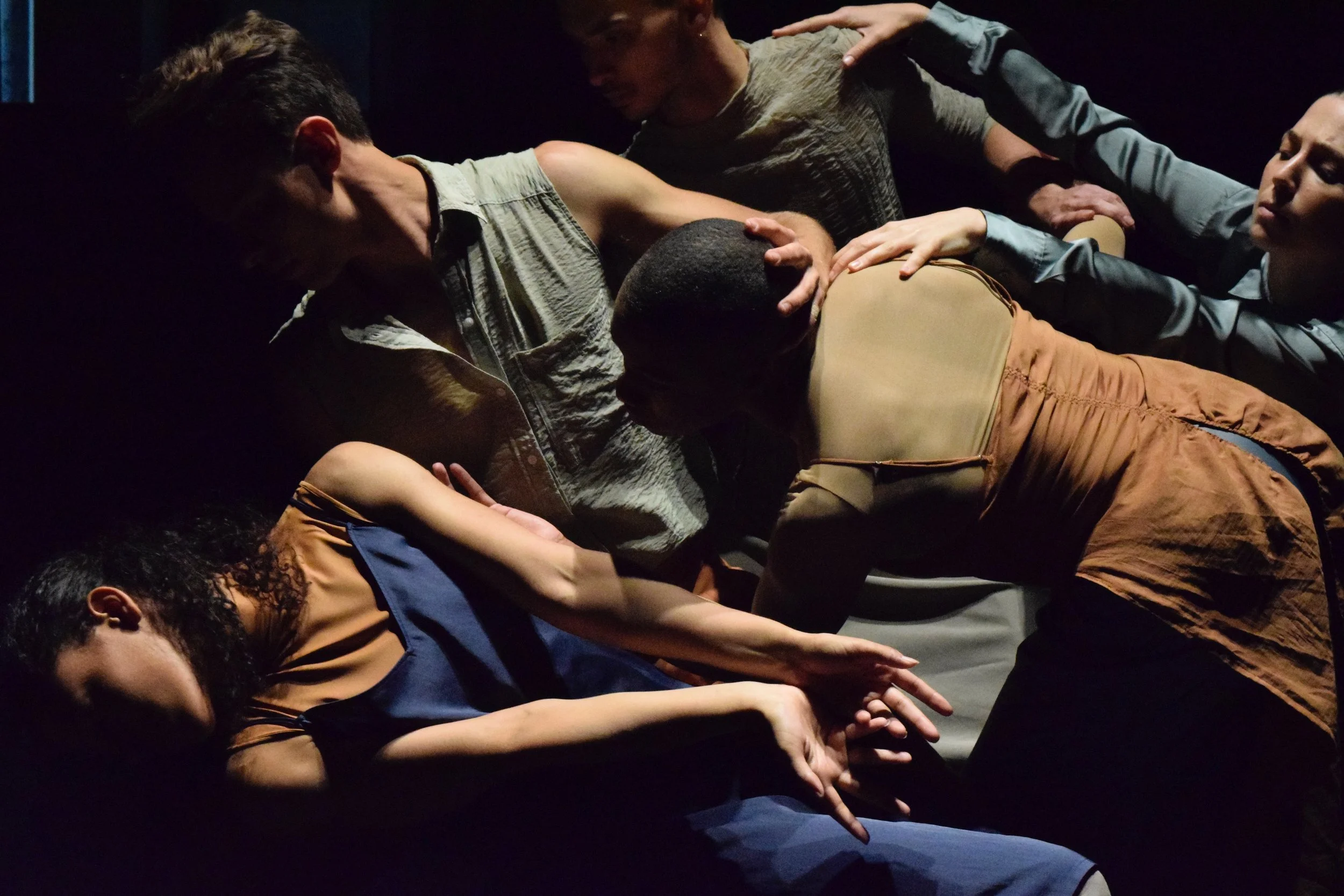
Branndi Lewis and Ericka Squire built this festival from nothing. An inaugural year, a full week, multiple events, different formats, different ticket types, all running back to back.
What they told me afterward is the thing I will keep.
No issues. Not one. Check-in worked across every event. They could walk into each night knowing that piece was handled, which meant their attention stayed where it belonged, on the artists and the audience and the hundred things only a founder can do.
For a first-year festival, that matters more than it sounds. First years are where things break. The systems are new, the volunteers are new, the crowd size is a guess. Removing one entire category of possible failure from their week was not a nice-to-have. It was the difference between running the festival and firefighting it.
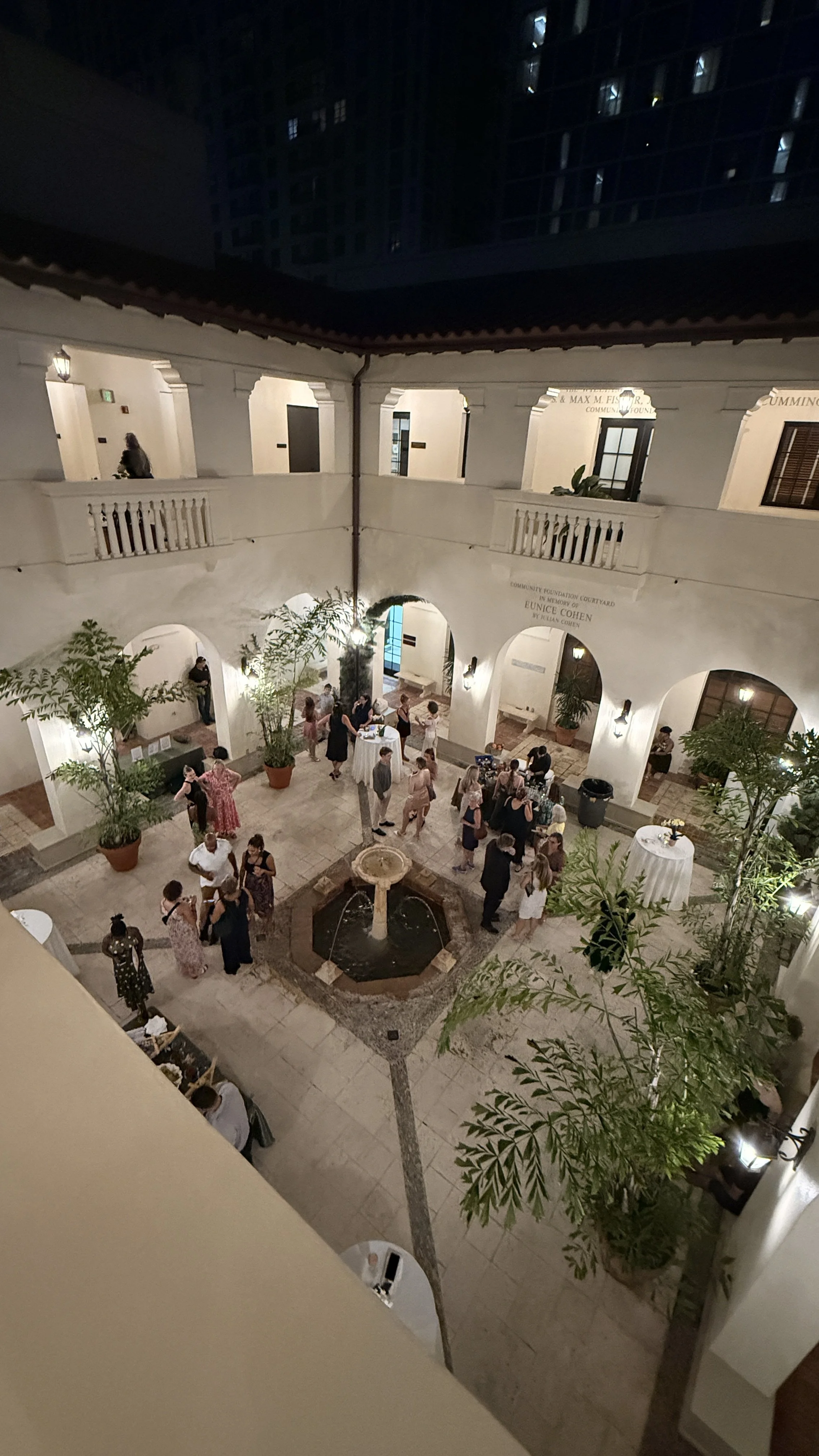
Guests starting to fill up the courtyard after the sold out Banyan Gala.
WHAT THE GUESTS SAIDEASY. AND IT FELT GOOD.
The feedback I heard from attendees was almost boring, and that is exactly the point.
People said buying a ticket was easy. They said it felt good. They said it felt like the festival.
That is three sentences describing something that took real work to make invisible. Nobody says "the checkout was seamless" about a checkout that was seamless. They just show up. The only time a guest ever describes a ticketing experience out loud is when it went badly.
So when people go out of their way to mention it, something worked.
WALKING IN AS A GUESTI GOT TO SEE THE OTHER SIDE OF MY OWN WORK
I was also a sponsor of the festival, which made this personal in a different way. And toward the end of the week, I got to attend in person.
That was the part I did not expect to hit me.
I spent months inside the back end of this thing. Event settings, form fields, ticket types, confirmation flows. All of it abstract. And then I walked into a room full of people who had moved through every one of those screens to get there, and were now watching dancers, and were not thinking about any of it.
I got to see the important work Branndi and Ericka are doing, live, in a full room. And I got to see the thing I had only ever seen as a checkout flow show up as an actual person walking through an actual door.
That is the whole job, really. You build something quiet so that something loud can happen.
DOES IT TRANSLATE?YES. AND I HAVE TO BE HONEST ABOUT WHY I CAN SAY THAT.
Usually when I run this section, I am on the outside looking in. I experience a brand digitally, then I experience it in person, and I tell you whether the two match.
This one is different, because I built part of the digital side. So I am not auditing a stranger. I am checking my own work, and I want to name that plainly.
Here is what I can say honestly:
The digital experience promised a considered, warm, well-run festival. The in-person experience delivered a considered, warm, well-run festival. The ticket page felt like Banyan. The room felt like Banyan. Nothing between those two moments made anyone question whether they were in the right place.
And the proof is not my opinion. It is the founders saying there were no issues across a week of events, and guests describing the front door as easy and good without being asked.
That is what translation actually looks like. Not making something pretty. Making it true all the way through.
THE QUESTION WORTH SITTING WITHWALK YOUR OWN ARRIVAL
If you run a festival, a venue, a restaurant, an event of any kind, do this.
Buy your own ticket. Book your own table. Fill out your own form.
Does it feel like you? Or does it feel like a different, colder company borrowed your guest for ninety seconds and handed them back?
Because that ninety seconds is your brand too.
Congratulations to Branndi, Ericka, and the entire Banyan Dance Festival team on an inaugural year that sold out and did not stumble. What you built is beautiful, and I am so glad I got to help hold the door open.
Did you attend Banyan? I would love to hear what the week was like from your seat.
Studio 113 is a brand strategy and design studio in West Palm Beach, built for hospitality, festivals, and experience-led brands. If your in-person magic isn't making it to your website, that's exactly the kind of translation work I do. Connect with me here