Translated is where I talk to the people building the places you remember. First up: Sophie DeWaal, founder of Arya Tea Bar on Clematis Street in West Palm Beach.
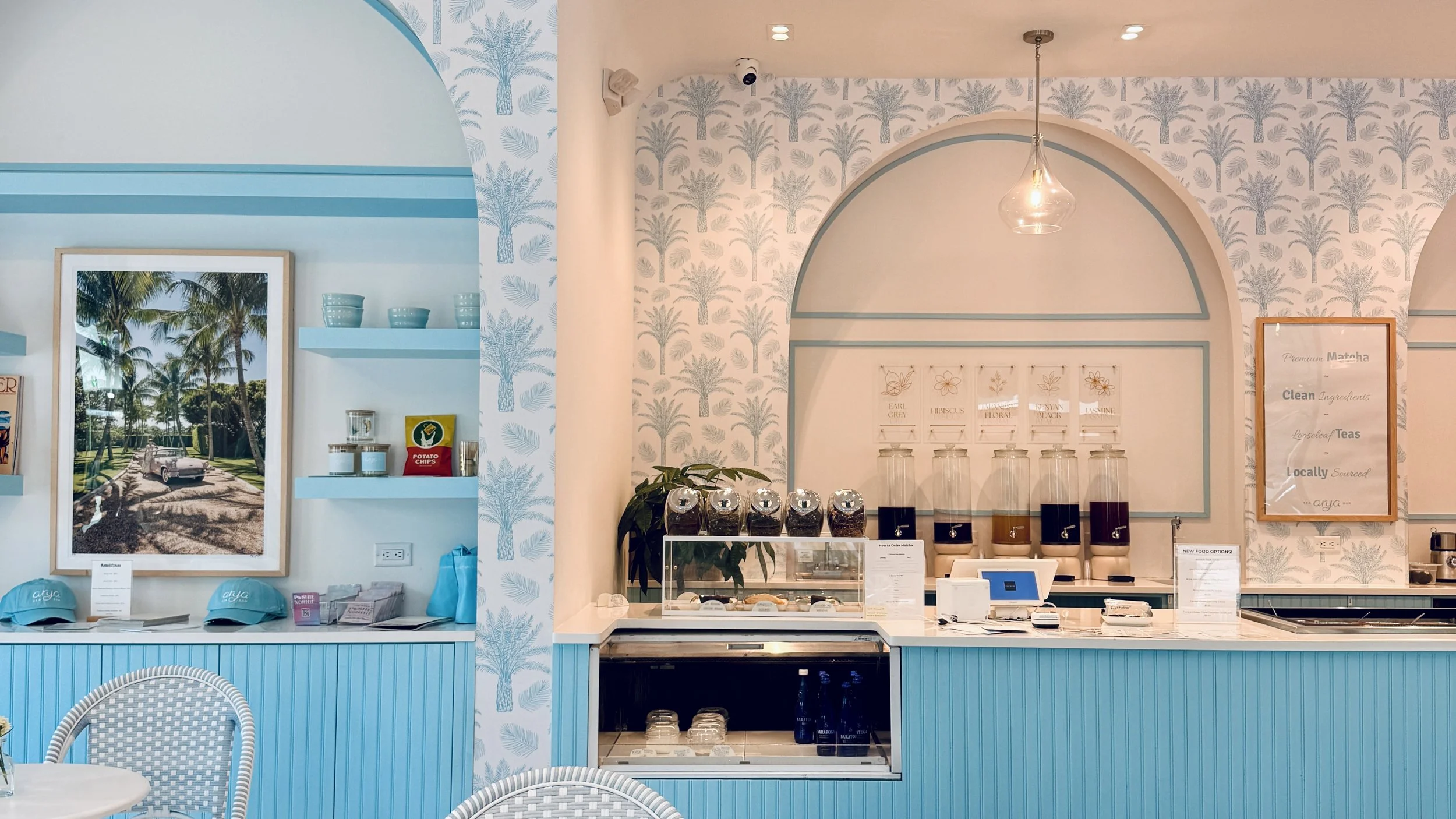
Arya Tea Bar
There is a question I ask hospitality clients that almost nobody can answer well: what do you want people to feel when they walk in?
Most owners answer with adjectives they think sound right. Warm. Welcoming. Elevated. Words chosen after the space already existed, working backward from what got built.
Sophie DeWaal answered with a door in the West Village.
We sat down at Arya Tea Bar in August, going into her second year. I have been a customer since close to the beginning. I sit in the corner seat when I can get it. I have watched the room change more than once.
I went in wanting to understand how a place that feels this specific got built, and whether the feeling was designed or whether she got lucky.
It was designed. It just got designed in an order almost nobody uses.
The color came first. Before the tea.
I asked what she wanted the place to feel like when someone walked in, back when it only existed in her head.
"Light, bright, airy. But what I really wanted to inspire was, when somebody walked in Arya Tea Bar, I wanted them to feel energized, feel happy, like a lightness in the air. And to think of it as a place where they can be inspired and think big and connect with people."
I mentioned color psychology, half as an aside. She stopped me.
"Do you want me to tell you something about the color? The color was the first thing I knew about the whole concept before I even knew I was going to make this a tea bar. When I thought I want to open a company, the first thing I knew was the color."
Then the story. She lived on Jane Street in the West Village. There was a townhouse door on her block.
"New York can get very cloudy. The sun sets at 4 p.m. in the winter. It's dark, and no matter what the weather was implying about mood, you'd walk by the door and it would make you happy. And I loved that, and I fell in love with the color of the door, and that's the same color you see in the shop. Because that's when I realized, like, that's the power of a color. You can give that to people. Just a moment of happiness, no matter what's going on in their day."
Sit with the sequence. Not: I am opening a tea bar, what should the brand look like. Instead: I know what I want people to feel, and years later I found the business that would deliver it.
That is brand strategy. She just did not call it that, and she did it before she had anything to attach it to.
I asked, near the end, what people compliment most.
"The color is like the number one thing. They love the color."
She did not expect that.
"The color I did not expect as much as it's happened. The fact that so many people walk in and it's one of the first things they say. Unexpected."
Here is the part worth underlining. The single most commented-on thing about her business is a decision she made before the business existed, and she was surprised it landed. The feeling you design first is usually the thing people notice, and you rarely get to find out until years later.
Why a tea bar at all
"I have only drunk tea my whole life, and for that whole time, I haven't had fun drinks to go get the way that people go get coffee. I felt like an afterthought in a coffee shop for basically my whole life."
That is the whole positioning statement, and it took her one sentence.
Post-COVID she watched matcha take off, and noticed the quality was wildly inconsistent. Before opening she went to Japan, to the farms where the matcha comes from. Then Taiwan, where bubble tea originated, which turned out to be more useful than she expected.
"Ironically, there is a very similar climate in Taiwan to South Florida. And when you think about, oh, if you need a refreshing drink on a hot day, tea is a very refreshing category. That's why it became so popular over there."
She went looking for quality and came back with a climate argument for why tea works in West Palm Beach. That is what obsession buys you. Not just better sourcing. Better reasoning.
She is blunt about the alternative:
"You see a lot, especially in matcha right now, of people adding it to menus because it's popular. But they're not obsessed with it, so it's not going to be quality, and you can kind of see through that as a consumer."
Where the brand became the floor plan
This is the part I actually came for. What does a feeling look like once it becomes an operating decision?
Her answer was the counter.
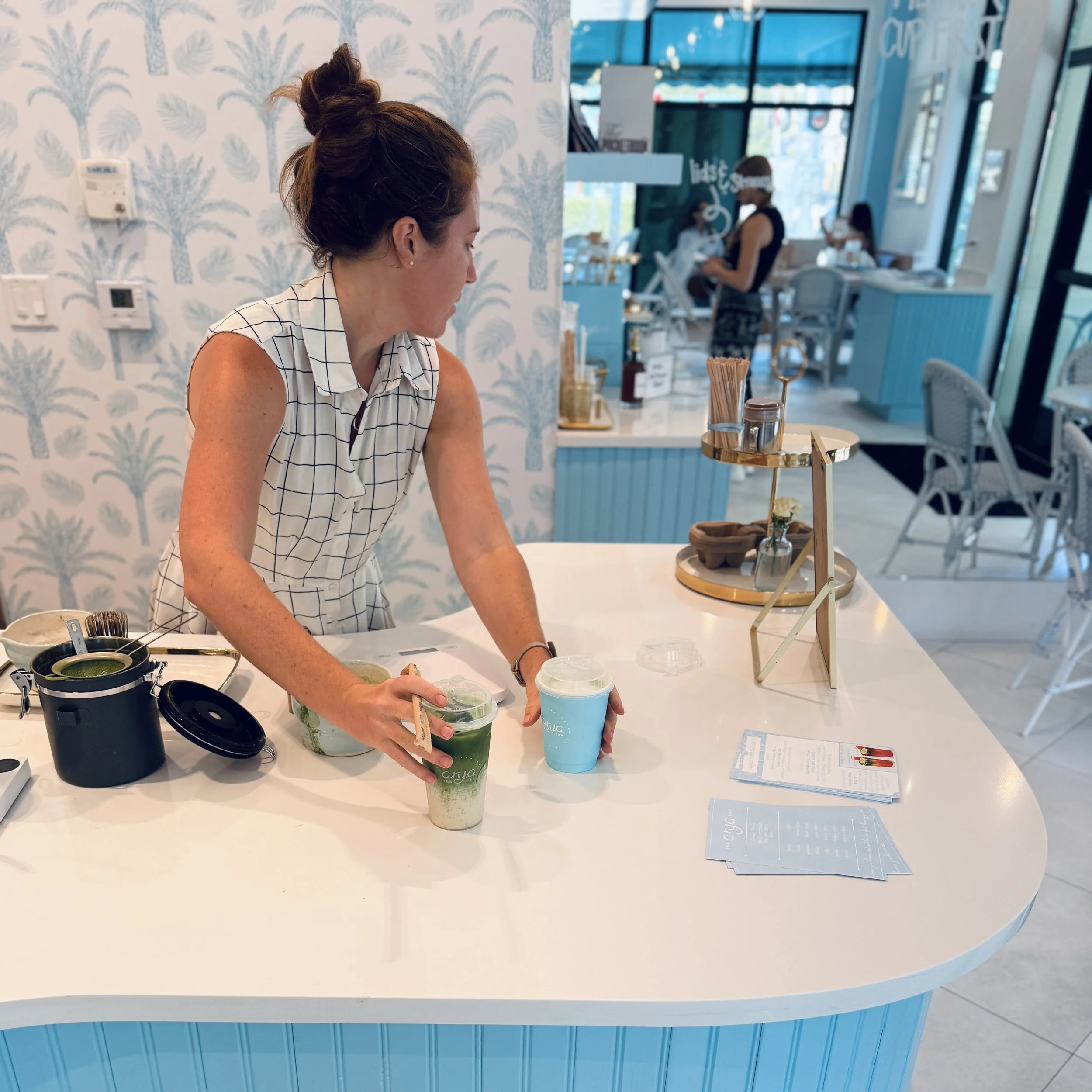
Sophie DeWaal, owner of Arya Tea Bar
"I have designed the whole way the counter is designed in Arya Tea Bar for transparency. It's to show people that we don't have anything to hide, because everything we're putting into your cup is real ingredients that we're making in the shop, and you get to watch us the entire way.
You'll notice in most coffee shops, there's a giant espresso machine blocking the view of what's happening. The baristas are turning around, making it. You can't really see what's happening, and then they turn back around and you have a drink. Arya is the opposite. We're facing you the entire time."
She traces it back to a value:
"Authenticity and transparency are kind of synonyms, right?"
A value became a sightline. That is the whole job. Most brand work dies in the deck because nobody ever converts the adjective into a decision somebody has to live with. She turned hers into millwork.
She also described the coffee shop she was deliberately not building:
"A lot of coffee shops are dark, woody, intimate, moody. They kind of encourage you to come in and not talk to anybody and sit down and be in your own little world. Arya Tea Bar very specifically is meant to create something different. Create connection. Create big thinking and imagination."
And the smallest ritual in the place, which I have never once noticed as a customer:
"When they leave, intentionally saying goodbye every time somebody walks out the door. Whether or not they hear it, whether or not they're looking for it. But just making sure we're ready to say goodbye every time."
A gesture the guest may never register, held anyway. That is what brand discipline looks like when nobody is watching.
How you teach a feeling
I asked how she gets a new staff member to understand the feeling and not just the task.
She hires for it first, then demonstrates it. This summer she and her store manager cooked a full meal at her apartment, and then served the baristas.
"They sat down. We had a coursed meal prepared for them. So I came and we took their orders, and then we served it out. You can't always teach by just saying. Sometimes you have to just show people and give people experiences that align with what experiences you want them to give to customers."
Every hospitality brand says the team is the brand. Almost none of them build an experience for the team that matches the one they ask the team to deliver.
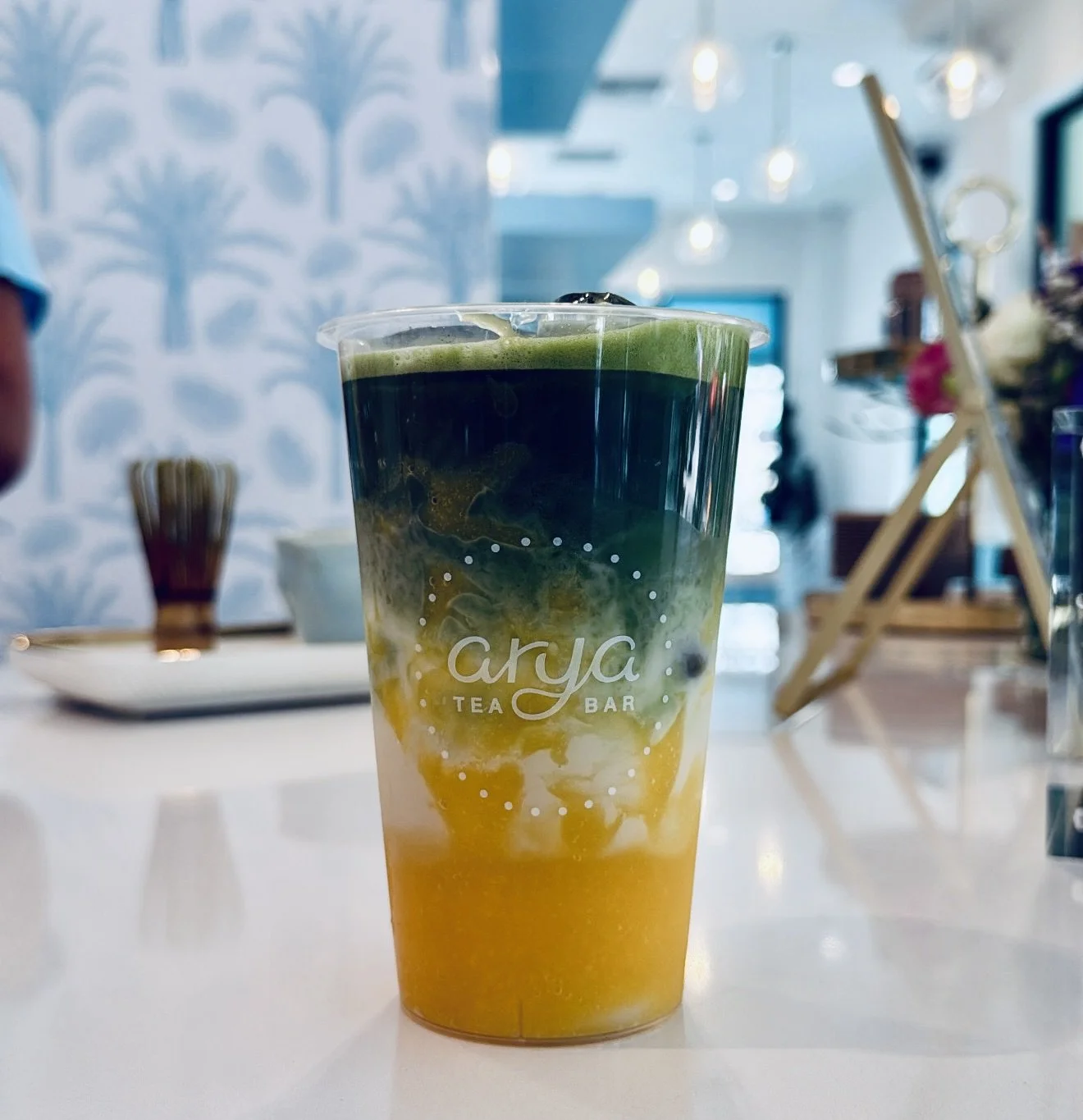
An iced mango matcha in an Arya Tea Bar cup
What she spent money on and does not regret
When she took the space, it was a dirt floor. No shell of a previous cafe. Nothing.
"When you're envisioning something from nothing, everything is a bet."
The bets she is glad she made are all texture. The arches behind the counter, which cost more. The sweeping round counter, which cost more. Custom cups with a line printed on the back: the best summer I ever had was a winter in Palm Beach.
"That's a little bit extra, but that's the type of thing that people see, and it's almost like a little wink. They see it and they're like, oh, that's so cute and thoughtful. And some of them take pictures of it."
And the flowers.
"My store manager went to the grocery store to pick up some things, and when she was out, she got flowers. That wasn't an accident. It's an extra thing, but it shows that we care about the little details. Even if flowers don't last forever, they're real. I don't want fake flowers, because that's a certain investment in the energy in the store."
Then:
"There's not one little detail that I did that I feel like, oh, that was a waste."
I asked what she skimped on. She could not name anything. That is rare, and it is not luck. When you decide the feeling first, the spending decisions mostly answer themselves.
The most expensive lesson, and it is not what you would guess
Before Arya, Sophie spent ten years in finance, investment banking in New York. She knew how to run teams. So she opened with one.
"You kind of always hear this warning that entrepreneurs get, and the warning is that you get stuck in your own business and you aren't able to think big because you're doing all of the minutiae. So in the beginning I set up the whole thing so that I had a whole team. I was like, I know how to run a team. Managing ten people, that's no problem."
Then she reversed it. This summer she has been in the store constantly.
"There actually is a phase where you should be in it. You should be talking to customers. You should be in the systems, and that helps you continue to evolve and get all the feedback you need. That's actually the most efficient way to grow.
You hear the advice that founders get too stuck in the minutiae. But you don't hear the advice that actually, if you know how to not be in the minutiae, start in it."
The best advice in this entire conversation, and it is the exact opposite of what every founder gets told.
Her staffing problem was also the opposite of the usual one:
"Our problem was very much like nobody wanted to leave, versus you kind of prepare that people do want to leave, and then nobody did."
Iterating in public
Most brick and mortar opens fully formed, or tries to.
"A lot of times when people walk into a brick and mortar store, they think, this is the concept. And we're doing this experiment that's almost the opposite, where it's like, the bare minimum we need to open is a concept and a menu, and then let's see how people react to it and build from there. And that's scary to do with a brick and mortar store, because you have set expenses from the beginning."
The seating evolved. Tables first, then a couch corner because people asked, then a bigger table for people working. Some signage is still the original.
What she describes next is the part I keep thinking about:
"Some people can come in the store and they can be like, oh, that exists because I said this thing once. And that's so powerful. It's such a powerful connection with your customers."
The iteration stopped being a liability and became the loyalty mechanism. Customers who watched the room change are invested in the room. You cannot buy that, and you cannot get it by opening perfect.
What people are actually buying
A man came in the day we talked. Asked about the classic teas, asked the price, and balked at seven dollars.
"I said, oh, that's the non-specialty tea shops where it will be less than five. That would be the coffee shops, where you're going to find it there.
You're paying two dollars more for an obsession that brings you the highest quality, versus somebody who couldn't care less about tea putting a bag in a cup with water that's who-knows-what temperature and handing it to you without a second thought. To me, the two dollars is worth the difference in the thought behind it."
She did not defend the price. She reclassified the business. He was comparing her to a coffee shop, so she moved herself out of the category. That is a positioning correction delivered across a counter in about four seconds, and most brands could not do it in a forty page deck.
The other compliment she hears constantly:
"The drinks taste real. Like the word real. Which to me is very validating, because we put a lot of effort into making sure that they do taste real. But also it's so sad in a way, because why is it not normal that our drinks taste real?"
The part that costs the most
I asked what she wishes more people understood about running a small hospitality business.
"How much of your heart and soul is in this. One of the comments we got on Google reviews the weekend we opened was someone who complained that we had run out of ice. And there was a moment where we ran out of ice, which was a good thing, because that meant we had so many people in line that we were working through. But that comment hurt, because I was the one running to the grocery stores to get more ice.
I go every week. I drive out to get our fruit because we're too small to be on a food distributor schedule. There's a lot of physical time and labor that goes into it, and I wouldn't have it any other way. But every nice word and every moment of grace and every positive experience means so much."
What I took from it
After we stopped recording, Sophie said something about hospitality I have not stopped thinking about. That what makes the industry different from almost any other is that you build a reoccurring connection. You are not selling to a stranger once. You are greeting the same people, learning their history, fixing things for them, seeing them again next week.
I work mostly with festivals and events, and I had never applied that word to my own clients. But an annual festival is the same mechanism stretched across a year. People come back because of how the first time felt.
That is the thing the deck never captures. Not the logo, not the palette. Whether the feeling survives contact with a real room on a real day.
At Arya it does. And it does because the feeling was decided first, before the concept, before the lease, before the dirt floor got a counter with arches behind it.
She picked the color first.
Everything else was built to keep the promise that color made.
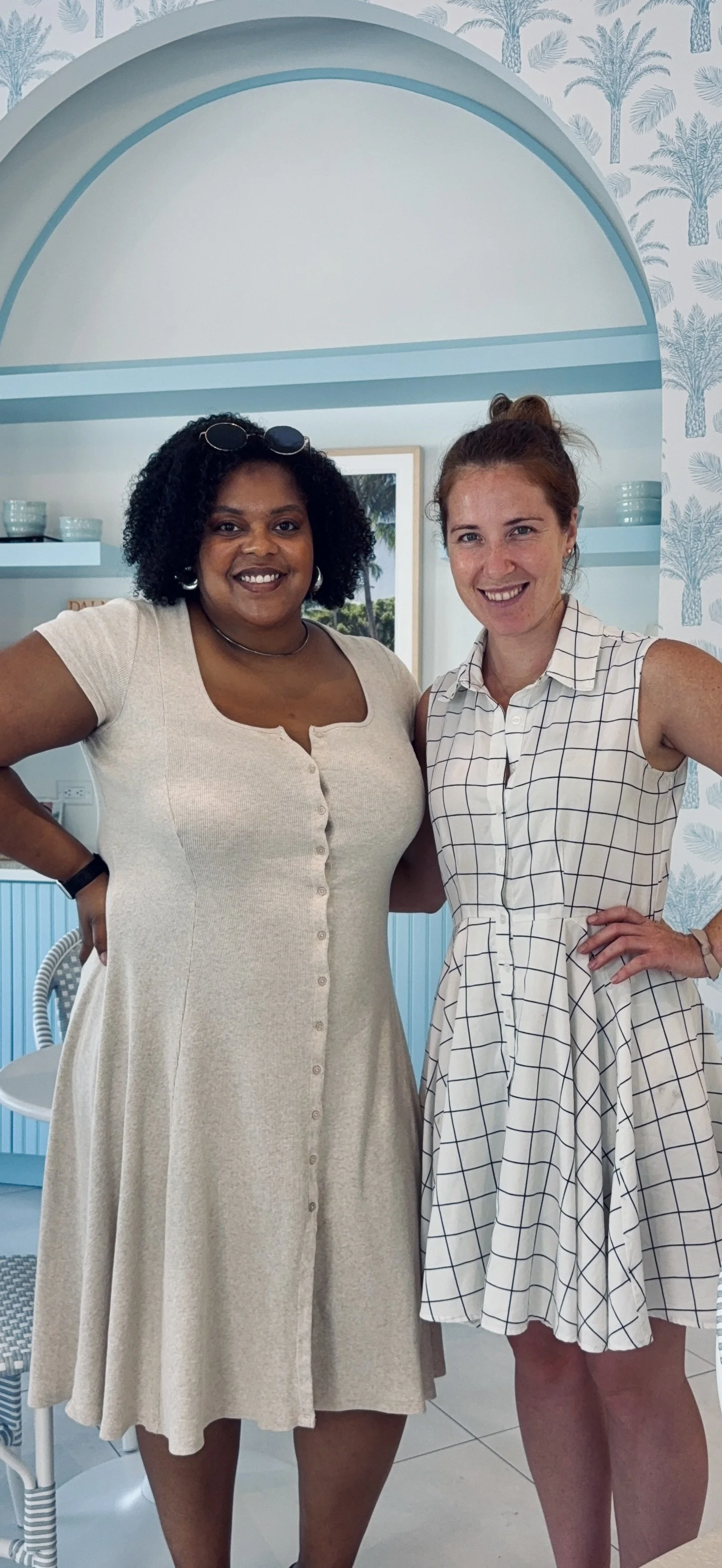
Brittani Millington and Sophie DeWaal
Arya Tea Bar is at 508 Clematis Street, West Palm Beach. Find them at aryateabar.com and @aryateabar. They run matcha workshops once or twice a month.Translated is written by Brittani Millington, founder of Studio 113, a brand strategy studio in West Palm Beach working with hospitality, festivals, and experience-led brands. If you build a place people walk into and you want to talk about whether it lands, I would like to hear from you. Connect with me here.